 EN
EN
Какво е избродирана тюл за мода и сватбено дизайн?
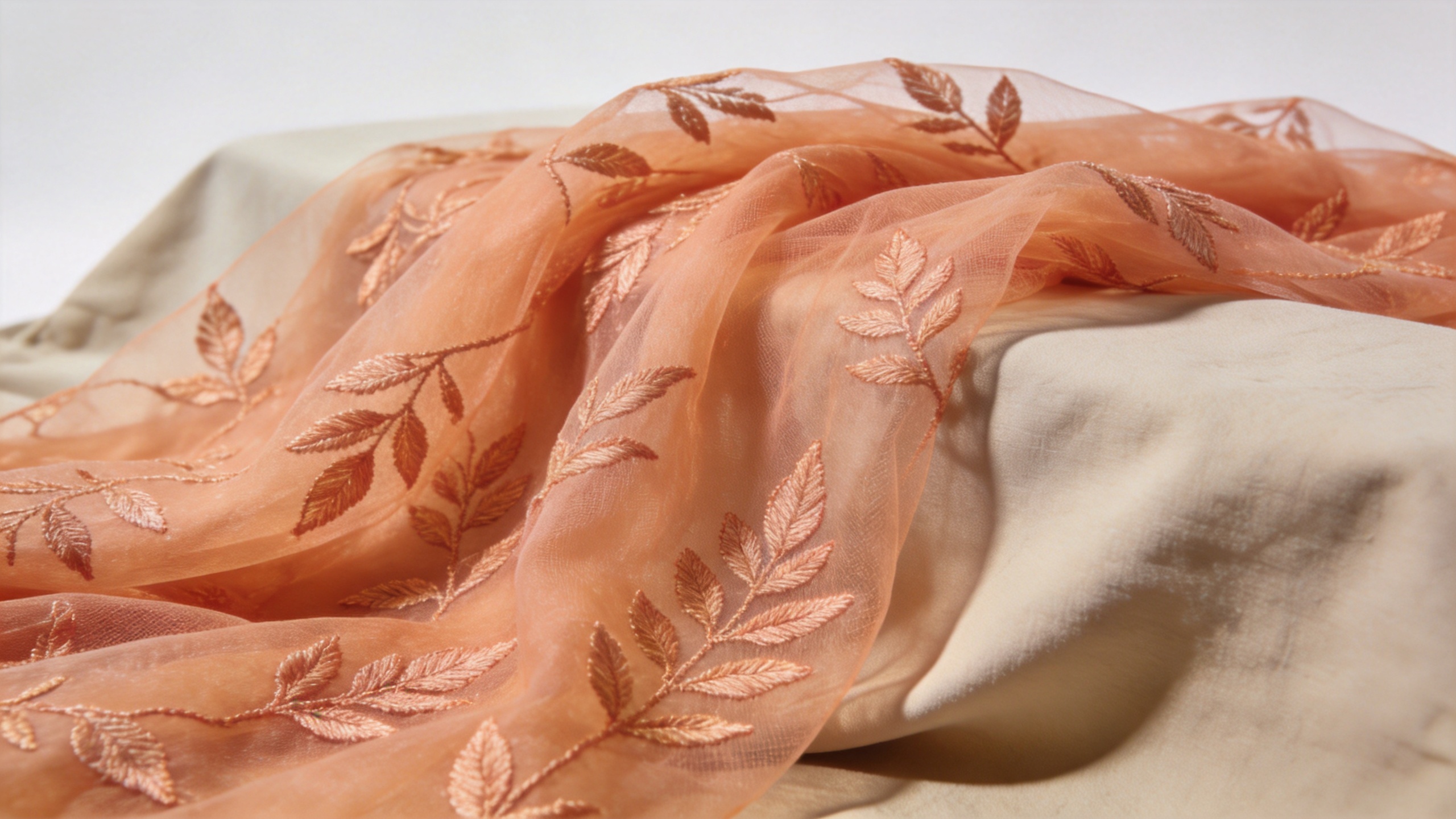
Тюл с изшитие е прозрачен, лек тъкан от мрежа, подобрена с избродирани мотиви, като цветя, листа, лози, геометрични линии или разпръснати декоративни детайли. Основната тюл тъкан придава на материята нейния прозрачен и въздушен характер; бродерията добавя рисунък, обем и визуален фокус. В модния и сватбения дизайн тази комбинация прави избродирания тюл полезен, когато дрехата има нужда от украса, без плътното покритие на гъста платнена тъкан.
От гледна точка на консултант по текстилни материали избродираният тюл се оценява по-полезно според крайното му предназначение, мащаба на мотива, тактилното усещане и конструкцията на дрехата, а не само според външния й вид. Една тъкан може да изглежда деликатна на пробник, но да се възприема напълно различно над подплата, по цяла пола или по прилепващ корсаж. Затова полезният първоначален въпрос не е просто „Този тюл ли е красив?“, а „Каква функция трябва да изпълнява в готовата дреха?“
Как се произвежда избродираният тюл и защо основната мрежа има значение
Тюлът е фин, отворен мрежест материал, който често се произвежда от полиестер, нейлон или коприна. Иглената тюлова тъкан започва с тази мрежеста основа, върху която след това се добавят избродирани декоративни елементи. Бродерията може да бъде в тон за по-незабележим ефект, контрастна за по-силно очертаване или комбинирана с мъниста, пайети или възли, когато се иска по-изразена повърхност.
Основната мрежа и бродерията са най-полезни, когато се разглеждат заедно. По-отворената мрежа може да създаде впечатление, че мотивите „плават“ върху кожата или подплънката, докато по-плътната мрежа може да направи шарката да изглежда по-свързана и покрита. Нито един от двата подхода не е универсално по-добър. Ако брифът изисква лек, многослойно сватбено облекло, отвореността може да е част от привлекателността. Ако облеклото изисква по-ясно очертана декоративна част, по-важни могат да бъдат покритието и разположението на мотивите.
Това лесно се пропуска при преглед на проба самостоятелно. При оценката на проби е полезно да се разглежда отвореността на мрежата заедно с предвидената подплата, осветлението и контекста на облеклото, а не изолирано.
Какво добавя бродерията към модната и сватбената тюл
Бродерията превръща тюла от фонов слой в видима повърхност за дизайн. Нишките могат да създадат релефен или текстуриран ефект, докато цветни мотиви могат да омекнат силуета, а геометрични мотиви – да внесат по-съвременно насочване. Бродерията също насочва погледа: рамка може да очертава подгъва или ръба на флер, разпръснат мотив може да запази полата визуално лека, а по-голям повтарящ се мотив може да стане фокусна точка на корсета или горния слой.
За брачни дизайн, избродираната тюл се използва често за рокли, ферониета, ръкави, наметки, надрокли и декоративни панели в стил на апликации. В модните колекции тя може да се появява в дрехи за специални случаи, слоисти рокли, поли, блузи, прозрачни вставки и изразителни горни слоеве. Това са примери за приложение, а не фиксирани правила; крайният ефект зависи от силуета, плана за подплата и начина, по който шарката се изрязва по панелите на дрехата.
Изборът не е просто между гъста и рядка бродерия; става дума за това къде мотивът се намира в силуета. Голяма цветна шарка може да бъде впечатляваща върху пълна пола, но може да изисква по-внимателно планиране на панелите при прилепваща форма. По същия начин леко избродираната тюл може да запази прозрачността, но може да изисква обмислен долен слой, за да се постигне желаният крайно завършен вид.
Избор на избродирана тюл за сватбена рокля
За сватбена рокля започнете с дизайнерската цел. Целта ли е мека, романтична повърхност, видима цветна текстура, драматична рамка или почти безтегловно покритие? След като това стане ясно, прегледайте платното спрямо конструкцията на роклята. Мащабът на мотива, обемът на бродерията, отвореността на мрежестата основа и обработката на ръбовете всички влияят върху начина, по който материала изглежда отблизо и в пълна дължина.
Практичен преглед може да включи следните въпроси:
- Подхожда ли мащабът на мотива за корсажа, полата, ръкавите или воала, където ще се използва?
- Ще функционира ли разположението на бродерията около шевовете, гънките, затварящите елементи и съединенията между панелите?
- Как изглежда тюла върху предложената подплата или долна основа?
- Трябва ли рамката да се постави по хема, деколтето, маншета или ръба на воала?
- Кои визуални детайли изискват одобрение в първия пробен екземпляр: яснота на мотива, разстоянието между мотивите, обемът на бродерията или цветът?
Вместо да наричате един ефект «изтънчен» или «люксозен», посочете конкретно кой мотив, кои мрежести елементи и кои детайли по ръбовете трябва да бъдат одобрени. Това дава по-ясна насока на дизайнерския екип и доставчика и помага да се разграничи вдъхновението от потвърдените изисквания.
Използване на избродирана тюл в модни дрехи
В модните дрехи избродираната тюл може да служи като надслой, вставка, материал за ръкави или декоративен слой върху друг плат. Една и съща избродирана тюл може да е подходяща за различни приложения, когато се промени конструкцията. Прозрачният надслой за вечерна рокля има различни приоритети в сравнение с модна блуза с мрежести ръкави или пола с частична избродирана панел.
За асортимента може да е полезно да се групират опциите за бродирана тюл по визуален ефект: деликатна текстура по цялата повърхност, концентрирани цветни мотиви, украса, водена от ръбовете, или по-графична бродерия. След това свържете всяка насока с конкретно приложение в облеклото. Това дава на търговците на едро, екипите на марките и разработчиците на облекло общ начин за обсъждане на опциите, без да се предполага, че един-единствен плат ще реши всеки дизайн-брийф.
Например, Нов дизайн професионално абрикосово кружево с листа, бroidирани на тюл цветя тъкани може да се прегледа като продуктова референция за стилове с бродирана тюл с листови мотиви. Страницата на продукта осигурява визуална отправна точка; целевото приложение, окончателните спецификации и точките за одобрение на пробите все още трябва да се потвърдят преди вземане на производствено решение.
Чеклиста „първо проба“ за дизайнерите и купувачите
Степента на бродиране влияе върху визуалното равновесие и избора на слоеве. Изборът на по-голяма степен на бродиране може да промени прозрачността, затова решете коя страна по-добре отговаря на брийфа. Преди вземане на решение за серийно производство поискайте преглед на проба, при който материала се оценява като част от готовото облекло, а не като изолиран текстил.
- Пошевайте целевата категория на дрехата и силуета.
- Определете къде трябва да се намира бродерията и къде трябва да остане отворена.
- Сравнете тюла с предвидената подплата, насоката на цвета и осветлението.
- Проверете разположението на мотива спрямо шевовете и размерите на панелите.
- Запишете въпросите, които остават открити за следващия пробен екземпляр, включително детайли за конструкцията и завършването.
Често срещана грешка при планирането е да се приема плътният мотив като достатъчна информация, преди да се проверят взаимодействията с шевовете и подплатата. По-голямата плътност на бродерията не означава автоматично по-добър резултат за булчински или моден продукт; тя може да изисква различен подход към конструкцията. След преглед на опциите за бродиран тюл запишете коя подплата и кои детайли на мотива промениха решението, за да е по-ясна заявката за следващия пробен екземпляр.
Превръщане на идеята за платно в по-ясно техническо описание
Избродираната тюл обединява нежността на мрежестата тъкан с визуалната детайлираност на бродерията. Нейната стойност в модния и сватбен дизайн се крие в контрола, който осигурява върху прозрачността, текстурата, разположението на мотивите и ефекта от слоевете. Подходящ избор е такъв, който поддържа предвидената силуетна форма на дрехата и е потвърден чрез подходящ пробен образец и проверка на конструкцията.
За дизайнерските екипи и купувачите ясно формулираното техническо описание трябва да посочва предназначението на дрехата, желания визуален ефект, мащаба на мотивите, посоката на подплънката и подробностите, които трябва да се потвърдят при пробното производство. Такъв подход превръща избродираната тюл от обща тъканна характеристика в практически материален избор.